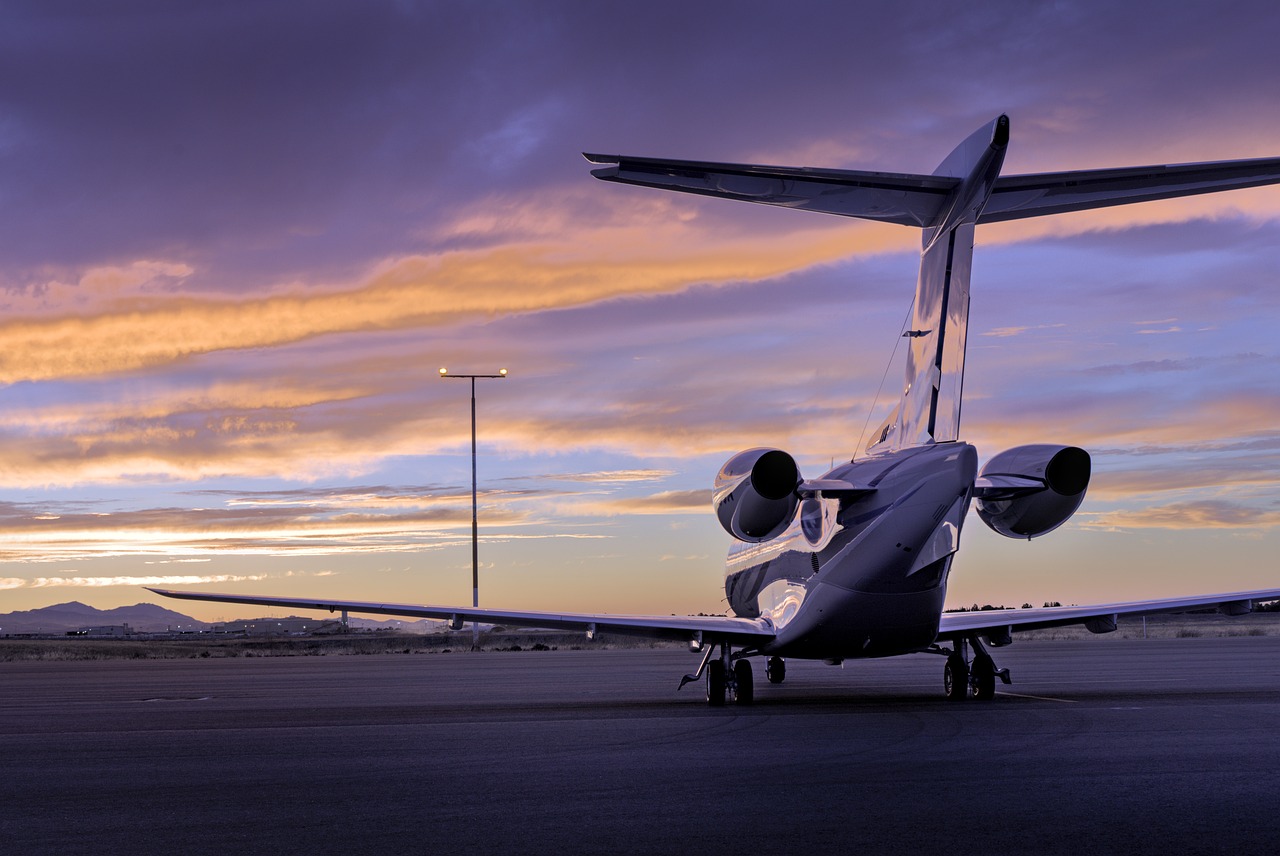
The short answer: yes. If your passport needs an eTA for a flight on an airline, it needs one on a private jet, a business jet or a charter too, because the rule covers arriving in Canada by air, whatever the aircraft. The exceptions are about who you are, not what you fly: U.S. citizens and green card holders, travellers with a Canadian visa, Canadian citizens and pilots or cabin crew who arrive to work on that flight. If you are a passenger, you can apply for a Canada eTA through a paid private service, separate from the Government of Canada.
If you apply yourself on canada.ca, you pay only the government fee. The decision usually arrives within minutes, though some applications take several days, and if yours needs more time, a letter with the next steps arrives within 72 hours of applying. A charter put together at short notice is a good reason to apply the moment the passenger list is known, without waiting for the departure date to feel close. The form even lets you say you do not know your travel date yet.
Flying on business changes nothing about the purpose of the trip. If the flight is for talks with a partner or a client, you are the same kind of visitor as an airline passenger, and meetings and negotiations count as a visit with an eTA behind them.
Do you need an eTA on a private jet or a charter flight?
Yes, when your passport requires one. Canada’s regulations ask a visa-exempt foreigner for an eTA when they seek to enter the country by air, and they do not separate a scheduled airliner from a chartered aircraft or a corporate jet. The word that matters is “by air”, not the type of plane.
IRCC speaks about charters directly: passengers from eTA countries need the document whether they travel on a regular airline or with a chartered group, as IRCC’s answer on chartered flights puts it. A privately owned jet is not named separately on canada.ca, so the careful way to read it is that the rule about arriving by air makes no distinction.
Three more points apply on any aircraft:
- There is no group application. A charter organiser or a travel agency cannot get an eTA for a whole party; each passenger needs their own. You may fill in the form for another person, such as a relative or a friend, by saying so at the start of the form.
- There is no age exemption. A child who needs an eTA on an airline needs one on a private flight as well.
- The eTA is linked to one passport. If a passenger travels on a different passport from the one used in the application, the approval does not follow them.
Which passengers on the same flight need an eTA?
Private flights often carry people with different passports in one cabin. The aircraft does not decide who needs what; each passport does.
| Passport or status | eTA on a private or charter flight? | What to carry |
|---|---|---|
| Passport from an eTA country (for example the UK, an EU country, Australia or Japan) | Yes | The same passport the eTA was issued for |
| U.S. citizen | No | A valid U.S. passport or another suitable document |
| U.S. citizen who also holds another nationality | No, if flying on the U.S. passport | The U.S. passport |
| U.S. permanent resident (green card holder) | No | Passport of your own country plus the green card or other proof of status |
| Canadian citizen, including dual citizens | An eTA cannot be issued | A Canadian passport; a U.S.-Canadian dual citizen can use a U.S. passport |
| Holder of a valid Canadian visa | No | The passport with the visa |
| Passport that needs a visa | A visa; some nationals may qualify for an eTA instead, but only when flying and only on conditions | Visa, or the eTA if the conditions are met |
| Diplomat accredited in Canada | No | Diplomatic documents |
For a traveller with two nationalities, the choice of passport is the part people trip over, and a short guide explains which of two passports to fly on.
The practical lesson is to check every seat by its passport, not by the owner of the aircraft or the name on the charter contract. A mixed party can easily have one person who needs an eTA, one who needs nothing and one who needs a visa, and the first sign of a mistake would be at the departure gate.
Do pilots and cabin crew need an eTA?
Often not, but the exemption is narrower than it sounds. IRCC’s rules free a foreign national from the eTA when they enter solely as a member of the crew of an aircraft, or to become one. It also covers crew who come to work on a later flight, or who finished work and are leaving, as long as they hold a ticket out of Canada within 24 hours after arriving.
Who counts as crew? A person employed on the aircraft to work during the flight, in operating it or serving its passengers or crew. People who fly free in exchange for some work on board, technicians on a service contract, security staff and anyone else aboard for a different reason are not crew under that definition.
The word “solely” is what separates two situations that look alike:
- A pilot who flies the aircraft into Canada as the operating crew is exempt.
- The same pilot, flying in for a holiday or a personal trip with no crew duty to take up, does not fall under that exemption. If the passport needs an eTA, an eTA is needed.
Two further points belong here. Crew with a passport that needs a visa should confirm their position with IRCC or their operator, because the visa exemption for crew depends on agreements between Canada and other countries. And crew do not need a work permit when the aircraft is foreign owned and registered, is used mainly for international carriage, and the work is operating it or serving passengers.
What about a pilot who owns the aircraft and flies it personally? Canada.ca does not spell out the owner-pilot case, and the definition speaks of a person employed on board. So if your passport needs an eTA, the simple route is to hold one.
Does a fuel stop or an unplanned landing in Canada need an eTA?
Flying through Canada normally needs an eTA or a visa, however short the stop. Two narrow exceptions apply to passengers on a flight that lands for a reason other than a planned arrival:
- A landing only to refuel. The passenger has no eTA duty if they hold the documents to enter the United States and the flight is bound for the U.S., or if they were lawfully admitted to the U.S. and the flight left from there.
- A forced landing. An emergency or another unforeseen circumstance makes the plane come down in Canada.
Notice what this leaves out. A refuelling stop on a route that neither starts nor ends in the United States is not covered by the exception, and neither is a planned stop where passengers get off. A transatlantic private flight with a technical stop, for instance, is a different case from a flight between two U.S. points. For ordinary airline itineraries, connections on scheduled airlines through Canada have their own article.
Who checks your eTA when you don’t fly an airline, and what happens on arrival?
On a scheduled flight, the airline scans the passport at check-in, and a passenger with no eTA on that passport is turned away before boarding; the article on how an airline checks an eTA at the desk shows what that looks like. For private and charter flights, canada.ca does not describe who checks the eTA before departure. The safest course for a passenger is to hold the approval before reaching the airfield.
The arrival is the same on any aircraft: the decision to admit you belongs to the border officer, the eTA does not guarantee entry, and the officer will ask for your passport and put a few questions. An eTA suits short visits, as a rule up to six months. The border side of a private arrival is run by the Canada Border Services Agency (CBSA), and the pilot or operator arranges it.
What if you arrive by private boat or by land instead?
The eTA belongs to air travel, with one recent exception on water.
| How you arrive | eTA for a passport from an eTA country? | Note |
|---|---|---|
| Private jet, business jet or charter | Yes | Same rule as an airline |
| Car, bus or train | No | A passport is needed |
| Private yacht, small boat or cruise ship | No | A passport is needed |
| A vessel (not a cruise ship) coming directly from Saint-Pierre and Miquelon | Yes, since 5 June 2026 | Needed to board the vessel |
Nationals of visa-required countries who can fly with an eTA cannot use it on land or water; they need a visa for those routes.
A private boat has a duty of its own. CBSA has said that a boat passing through Canadian waters without stopping does not have to report, but if you dock, anchor, moor, come alongside another vessel, or put people or goods ashore or take them aboard, you must report to the border service. Failing to do so can lead to a fine of at least $1,000, and the boat can be detained.
The short version
- Private jet or charter: the eTA question is answered exactly as for an airline, because the rule is about arriving by air.
- Each passenger applies separately, with no group application and no age exemption.
- U.S. citizens, green card holders, holders of a Canadian visa and Canadians do not get or need an eTA.
- Crew who enter solely to work on the aircraft are exempt; the same person travelling for their own reasons is not.
- A fuel stop is exempt only on a flight into or out of the United States, and only if the U.S. document conditions are met; a forced landing is a separate exemption.
- By land or by boat you need a passport, not an eTA, except on a vessel coming directly from Saint-Pierre and Miquelon.
FAQ
Do I need a visa if I have a private jet? The aircraft changes nothing; the passport decides. Visa-exempt travellers need an eTA, visa-required travellers need a visa, and U.S. citizens, green card holders and Canadians do not need an eTA.
Who is exempt from eTA? U.S. citizens, U.S. permanent residents, holders of a Canadian visa, diplomats accredited in Canada, crew working on the aircraft, and passengers on a flight that lands only to refuel under the U.S. conditions or in an emergency. Canadians cannot get an eTA and need a Canadian passport.
Does airline crew need a visa? Crew arriving to work are exempt from the eTA, including those leaving within 24 hours. For visa-required passports the exemption depends on agreements between Canada and other countries, so ask IRCC or the operator. A crew member on a personal trip is not covered.
Do I need an eTA to fly through Canada? Yes, flying through Canada by air needs an eTA or a visa, however long the stop. The exceptions are a refuelling stop on a flight into or out of the United States and certain visa-free transit programs.
Do you need to go through customs on a private jet? Yes. A border officer decides on entry, and an eTA does not guarantee it. The pilot or operator arranges the arrival with CBSA.