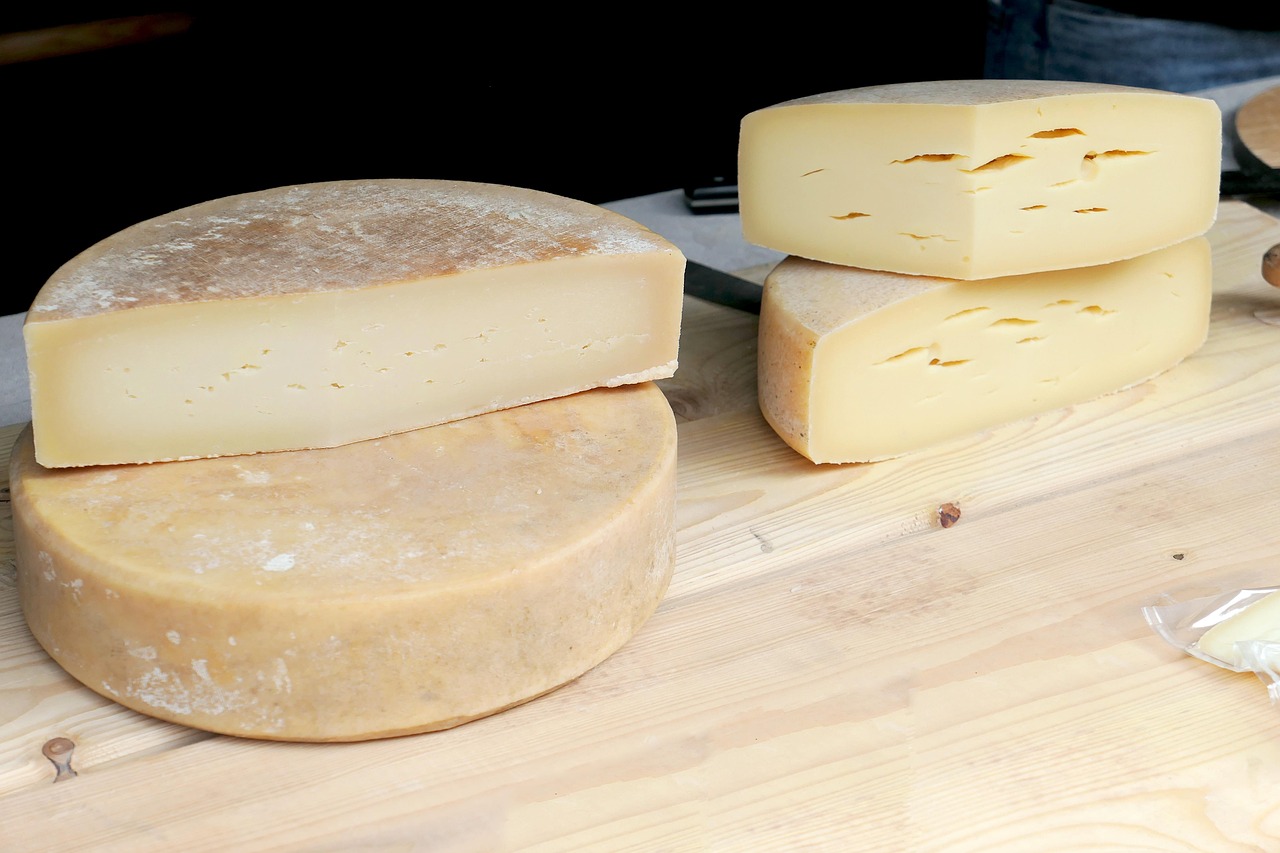
The short answer: yes, visitors may carry cheese into Canada for their own use, within 20 kg per person, and every piece has to be declared. Any cheese from the US qualifies, pasteurised cheese from elsewhere is accepted, and raw-milk cheese from other places depends on the country. Your travel authorisation is a separate matter, and you can apply for a Canada eTA ahead of the trip through a private service that charges a fee and is separate from the Government of Canada.
If you apply on canada.ca instead, the government fee is all you pay.
For meat, snacks, baby food and the rest, see what else a tourist can pack in the food bag. Importing cheese to sell it is a commercial matter and falls outside this guide.
Two questions often get mixed up. Canada’s food inspection agency (CFIA) decides whether a cheese may come in at all, with animal disease in mind. The Canada Border Services Agency (CBSA) and Global Affairs Canada deal with what a larger quantity costs in duty. Alcohol and presents have their own figures in the visitor duty-free allowance for gifts, alcohol and tobacco.
Can you bring cheese into Canada? The rule in one table
Yes. The result turns on where you are travelling from and whether the milk was pasteurised.
| Coming from | Type | CFIA position | What to do |
|---|---|---|---|
| United States | Any | 20 kg or 20 L maximum | Declare it |
| UK, Netherlands, Portugal or another country without a lumpy skin restriction | Pasteurised | Up to 20 kg | Keep the label, declare |
| Same group | Raw milk | Only from countries clear of certain animal diseases | Check AIRS first |
| France, Italy, Spain, Switzerland, Greece, Bulgaria, Cyprus | Pasteurised | Up to 20 kg | Pick a clearly labelled pack, declare |
| Same group | Raw cow or buffalo milk | Not recognised as free of lumpy skin disease | Check AIRS, be ready to give it up |
| A country not on CFIA’s lumpy skin free list | Raw milk | Generally refused | Check AIRS, expect to give it up |
To check a case, use AIRS, the agency’s Automated Import Reference System, which sorts rules by product and country of origin. CFIA sets out the basic limits in its personal-use food tables. For arrivals from outside the US, the dairy named there is pasteurised cheese, yogurt, kashk and ice cream, plus raw-milk cheese as the conditional case. Milk and butter from those origins are not on the list.
How much cheese can you bring? 20 kg and the $20 question
CFIA’s ceiling is 20 kg (about 44 lb) for each traveller. That limit comes from the food rules, and staying under it does not settle the question of duty.
CBSA memorandum D19-10-2, dated 17 November 2026, says that a resident of Canada may import dairy products worth $20 in total for personal use without a separate permit. The figure applies to each person, not to a family as one unit. More can still be imported, but at the higher “over access commitment” rate. According to CBSA’s I Declare guide, goods above these limits that arrive without a Global Affairs Canada permit face duty of 150% to 300% of their value.
Does the $20 figure bind a visitor? The memorandum speaks about residents and says nothing either way about guests. If you are one, declare the cheese, say roughly what you paid and ask the officer how it will be treated. Do not assume 20 kg comes in free of charge: CFIA notes that extra duties and taxes may apply above Global Affairs limits for personal imports.
Bringing cheese from the US
This is the simplest route. Dairy of every kind, including cheese, butter, milk and yogurt, may come from the United States within 20 kg or 20 L for each traveller, whether pasteurised or not.
Residents who shop across the border should watch the money side, because a few blocks of cheese can pass $20. After less than 24 hours away there is also no personal exemption to lean on. Guests driving up should declare what is in the cooler and let the officer assess it.
Bringing cheese from Europe: lumpy skin disease and raw-milk cheese
Lumpy skin disease is a disease of cattle and buffalo, so the restrictions concern cheese made from their milk. It affects how Canada treats several major cheese countries. On CFIA’s page dated 9 September 2026, European Union members count as free of it except Bulgaria, Cyprus, France, Greece, Italy and Spain. Switzerland is restricted as a whole country. Restrictions began for Italy on 23 May 2025, for France and Switzerland on 26 May 2025 and for Spain on 3 September 2025; those on Bulgaria, Cyprus and Greece are much older.
Pasteurised-milk cheese from the affected countries is still admitted. Raw-milk cheese is the difficulty. CFIA’s notice to commercial importers accepts it only under documented conditions, such as proof that the milk was collected before the restriction date, or, for aged cheese from Switzerland, Italy or France, a veterinary certificate. The pages for travellers do not spell out how this applies to a suitcase, so check AIRS, and expect that a raw-milk wedge may be taken at the border.
Say you are choosing between a raw-milk Comté, a raw-milk Parmigiano and a Brie marked as pasteurised. The Brie fits the general rule. The other two need an AIRS search before you buy. Ask the shop to show you the milk treatment on the label, and keep the wrapper with the cheese.
Cheese from the UK and other countries on CFIA’s free list
CFIA recognises the United Kingdom as free of lumpy skin disease, along with Norway, Iceland, Australia, New Zealand and several countries in the Americas. As of September 2026 the Netherlands and Portugal are not among the excluded EU members.
For a farmhouse cheddar, a Dutch gouda or a Portuguese sheep’s cheese, this particular disease is therefore not the obstacle. That is no blanket pass for raw milk, since CFIA’s condition refers to more than one animal disease. Look up the product and country in AIRS before packing it.
British guests also need their travel authorisation in order, and what British travellers need before the flight covers that side.
Carry-on or checked bag?
For flights leaving Canada, the screening authority CATSA draws the line by texture and packing:
| Cheese | In the carry-on | Where bigger quantities go |
|---|---|---|
| Hard and semi-soft | No volume limit | Either bag |
| Spreads, and cheese kept in liquid such as feta or mozzarella | Containers up to 100 ml | Checked bag |
On the way to Canada, your departure airport’s rules apply, so look them up before you fly. Passing security there says nothing about whether the cheese is admissible on arrival. For a long journey, ask the seller to vacuum-pack firm pieces.
Do you have to declare cheese at Canadian customs?
Always. All food must be declared, whether you use a kiosk, the ArriveCAN Advance Declaration or a paper card, and CBSA may inspect it. A clear description helps: “Two small wheels of gouda, pasteurised, about 2 kg.” Have the receipt handy in case value comes up.
Undeclared food can be held, a fine can reach $1,300, and serious cases go to court. For the wider picture of that desk, read what CBSA officers can ask at the border.
The airline looks for your eTA at boarding, while CBSA looks at food when you land. Before leaving home you can check your eTA status, but an approval has no bearing on your luggage.
Bringing cheese back to Canada as a resident
The dairy figure is $20 per person without a permit, and the higher duty can apply to anything beyond it. Your general personal exemption depends on time away: nothing under 24 hours, up to CAN$200 for 24 to 48 hours, and up to CAN$800 from 48 hours. Do not read CAN$800 as a cheese allowance. Keep receipts, add up your dairy spending before you reach the officer, and decide whether that extra wedge is worth the possible charge.
Cheese as a gift for family in Canada
A visitor’s present worth no more than CAD 60 can enter without duty or taxes. Wrapping a cheese does not switch off CFIA’s origin rules or the 20 kg ceiling, and it still counts as food on the declaration. Tell the officer both things: it is a gift, and it is cheese. A modest pasteurised piece with its label and receipt is the easiest version to explain.
The short version
- Personal-use cheese is limited to 20 kg per person.
- From the US, any type qualifies.
- From elsewhere, pasteurised cheese is accepted and raw-milk cheese depends on the country.
- Lumpy skin restrictions make AIRS essential for raw cow or buffalo cheese from France, Italy, Spain, Switzerland, Greece, Bulgaria or Cyprus.
- Residents may bring $20 of dairy per person without a permit.
- Leaving Canada, spreads and cheese in liquid are held to 100 ml in the cabin.
- Declare every piece.
FAQ
Does cheese need to be declared at customs? Yes. Cheese is food, so it goes on your declaration whatever its amount, origin or purpose. CBSA officers may ask to see it.
Can I pack cheese in my checked luggage? Yes, subject to the import rules for its origin. On flights leaving Canada, the 100 ml cabin limit concerns spreads and cheese kept in liquid, so larger containers belong in the checked bag. Other departure airports set their own screening rules.
Can I bring cheese into Canada from the US? Yes. Dairy of any kind is accepted within the 20 kg ceiling, provided you declare it. Duty is a separate question, and residents should keep the $20 dairy figure in mind.
Can you bring cheese into Canada from Europe? Pasteurised cheese, yes. For raw cow or buffalo milk cheese from France, Italy, Spain or Switzerland, check AIRS before you travel because of lumpy skin disease. Raw cheese from other European countries also depends on animal disease status.
How much cheese can I bring back to Canada? CFIA’s ceiling is 20 kg per person, but a resident may bring only $20 worth of dairy without a permit. Above the limits, duty of 150% to 300% of the value can apply. Keep your receipts and declare everything.